
Know yourself.
Choose your path.
Helping young people understand themselves before they have to decide what comes next.
The idea behind Nura
What if we helped young people answer “Who they are” before we asked them “What they want to do?”
Most teenagers are asked some pretty big questions about their future.
What subjects do you want to take?
What do you want to study?
What career are you interested in?
The problem is, those questions often come before they've had much chance to work out who they actually are.
Nura starts somewhere different.
We help young people understand their strengths, how they think, what matters to them and what they're naturally drawn towards. Then we help them explore where that might take them.
Before you choose a career, get to know yourself.
We think there's a missing step in the way we help young people think about their future.
We spend a lot of time telling students about careers, courses and job opportunities. But knowing what's out there doesn't necessarily make it easier to work out what's right for you — particularly when you're 15 or 16 and still figuring yourself out.
Nura gives students a chance to ask some slightly different questions:
What am I good at?
How do I tend to think and work?
What matters to me?
What kind of environment brings out the best in me?
What might I want to explore?
There aren't right or wrong answers. Students don't need to have their future worked out at the end — they just need to understand themselves a little better than when they started.
So, what is Nura?
A guided self-reflection and career exploration experience for young people.
Students start with a personality and self-reflection assessment designed specifically for teenagers. But the assessment isn't the destination — it's the starting point. Nura helps them make sense of the patterns that emerge, then start exploring possibilities and, importantly, trying things out.
Sometimes you don't discover what you're interested in by reading about it. You discover it by doing something.
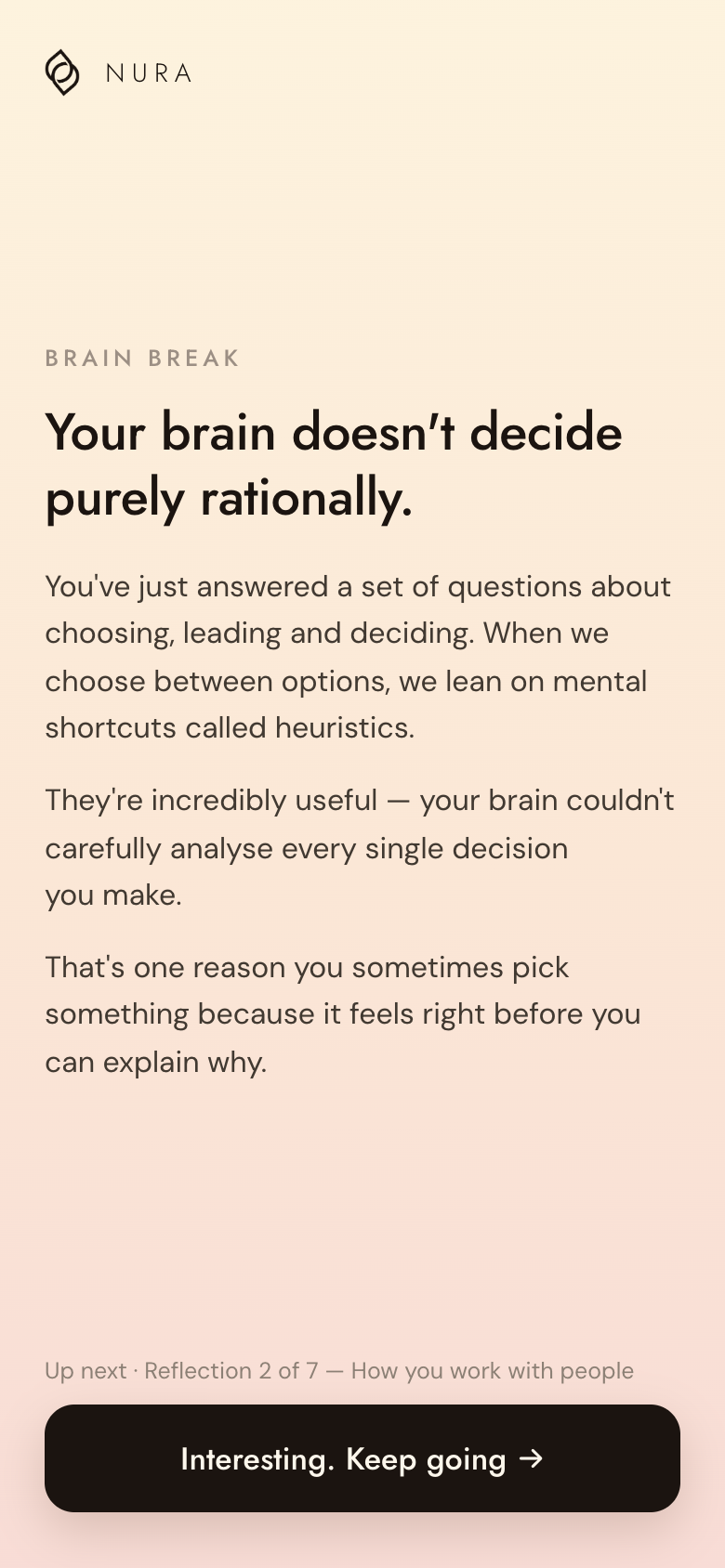
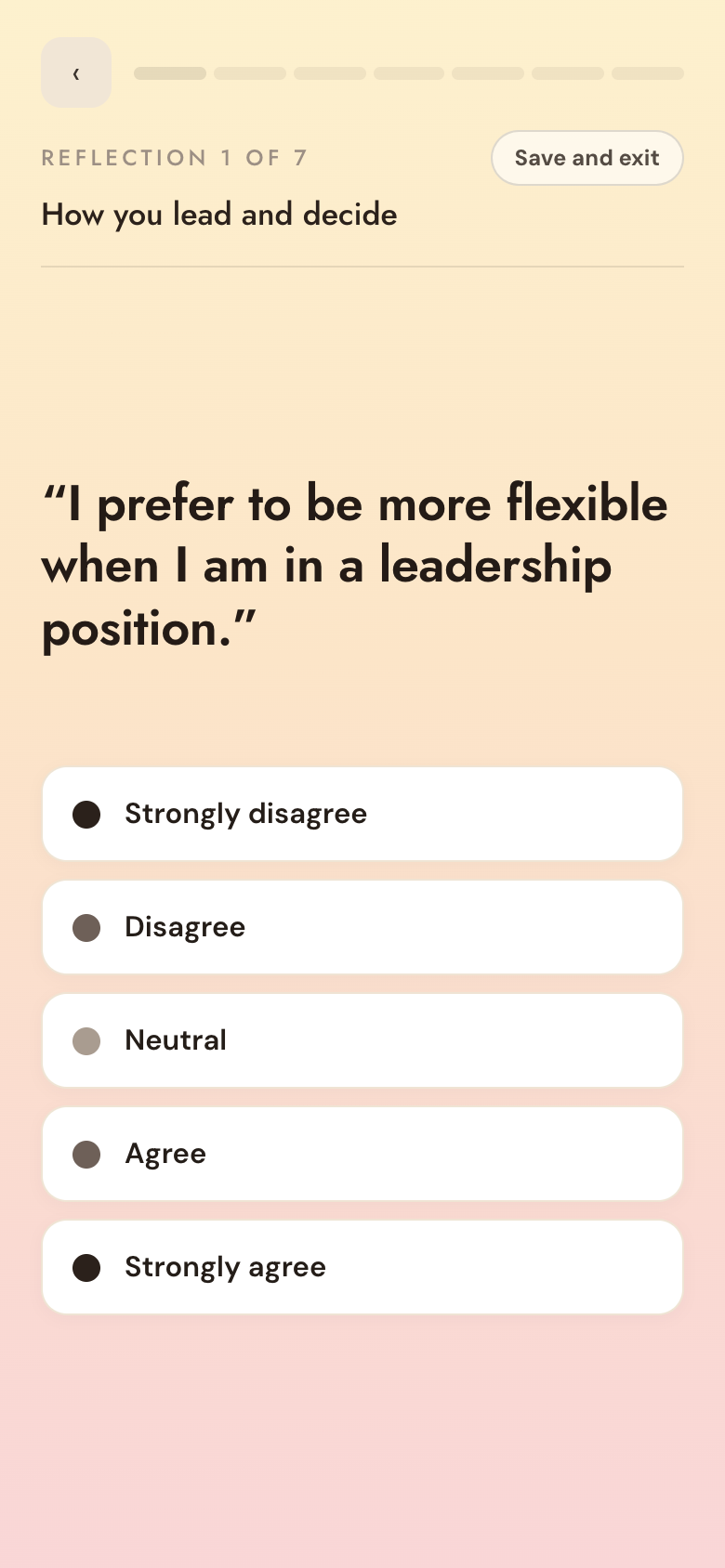
01 · It starts with understanding yourself
No revision. No studying. No right answer.
Students work through a series of questions designed to get them thinking about themselves — with no pressure to give the answer they think an adult wants to hear.
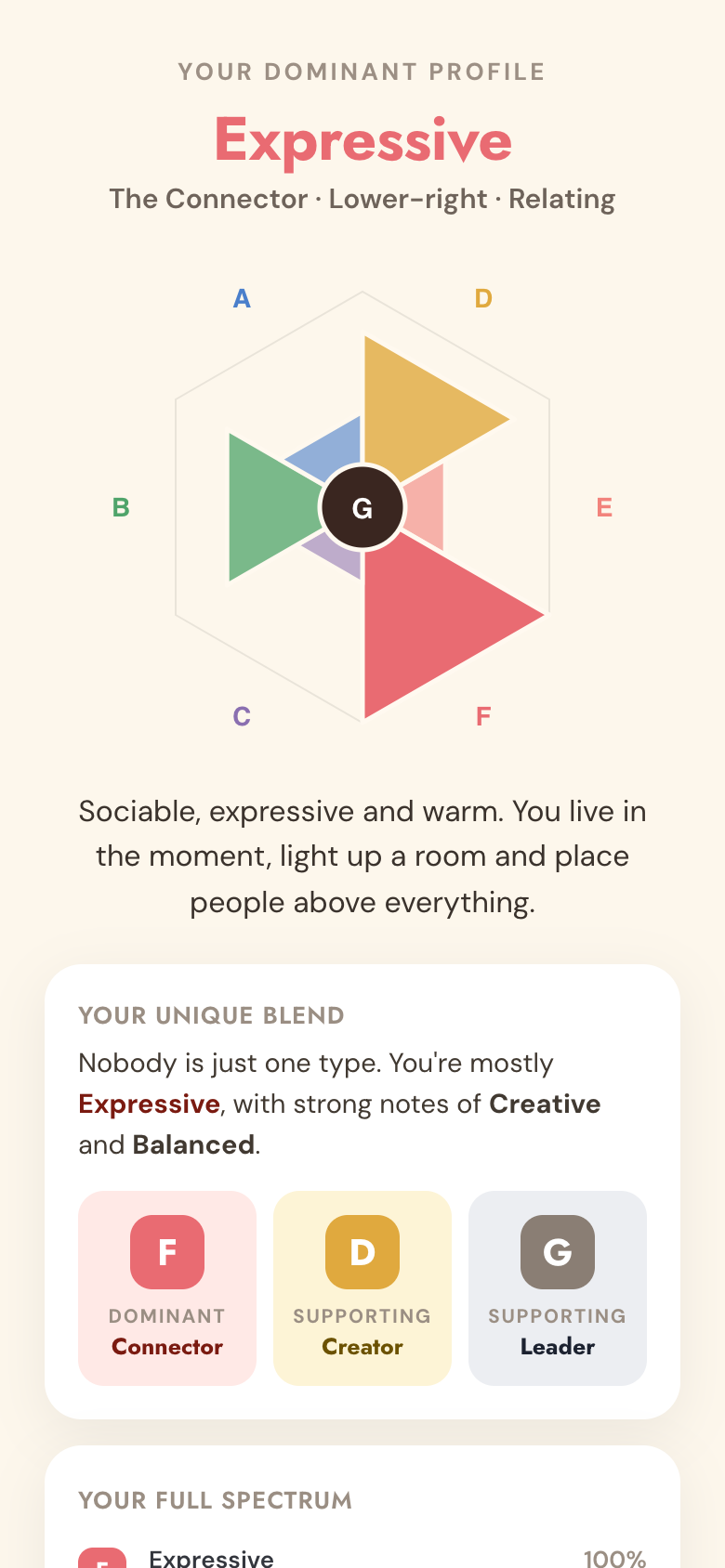
The result is a picture of some of the things that make them tick. Not a label. Not a prediction of what they're going to become. Just a useful starting point for a much bigger conversation.
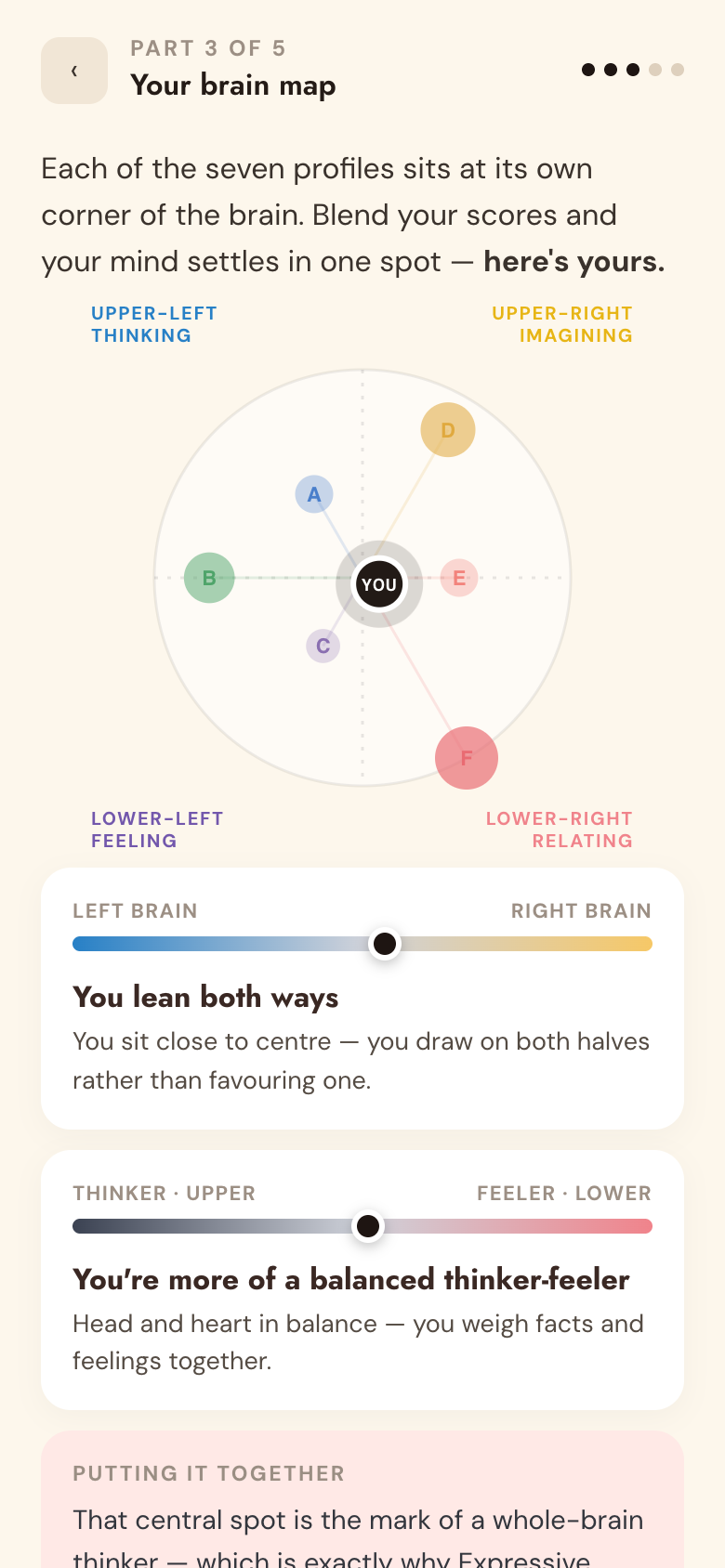
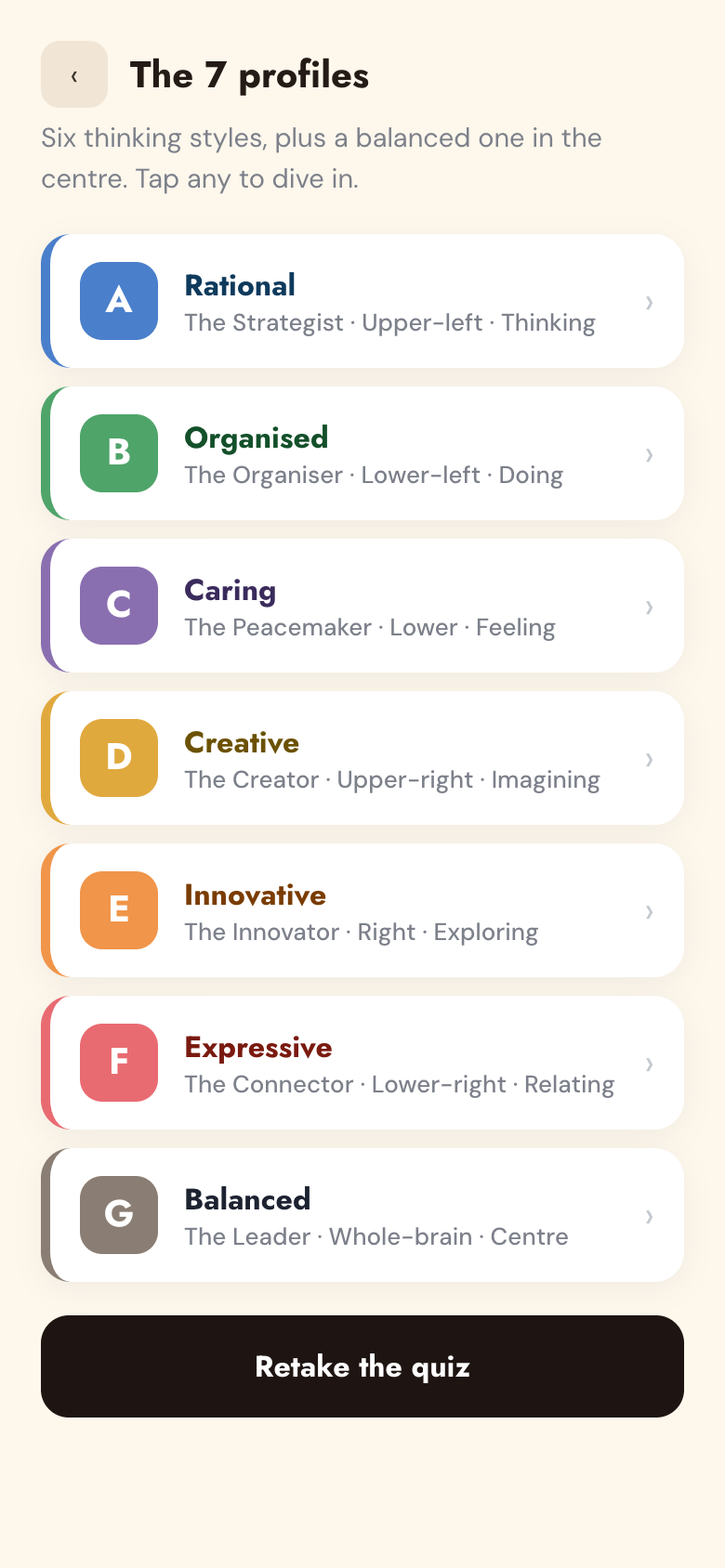
02 · Then we help them make sense of it
It's surprisingly hard to see your own patterns.
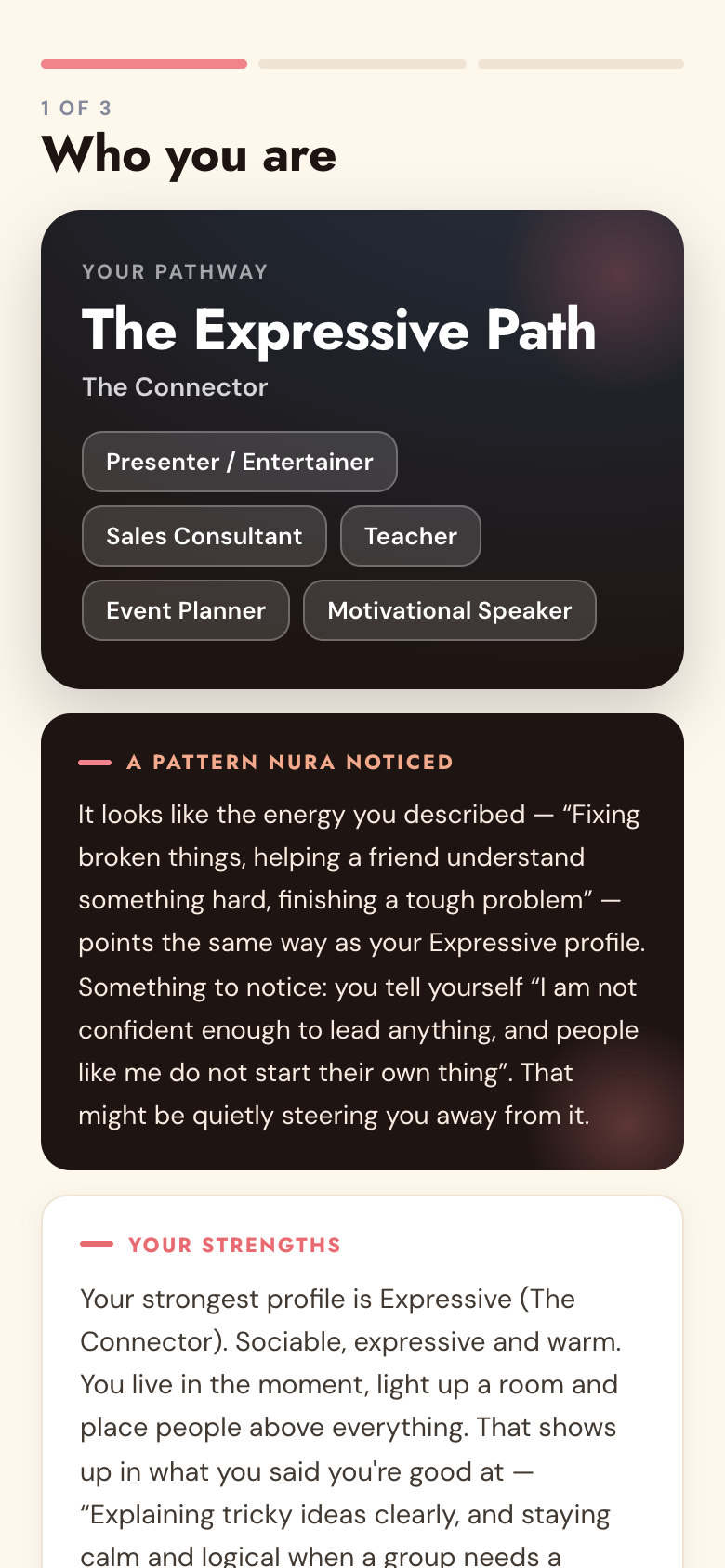
The things you're naturally good at often just feel normal to you. Nura helps students put some language around them — the strengths that come through, how they might show up in different situations, and what that could mean.
Sometimes they'll recognise themselves immediately. Sometimes they'll disagree. That's OK too — it gives them something to think about.
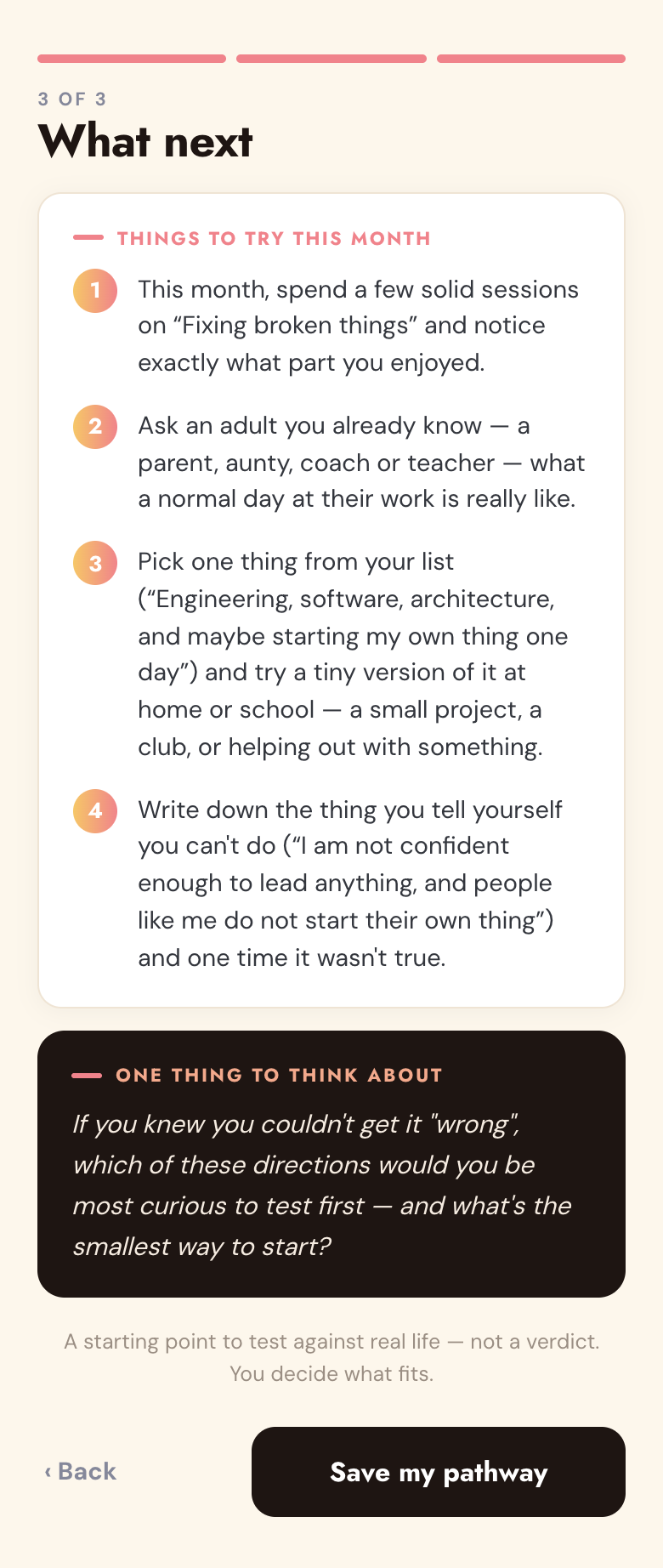
03 · And then comes the interesting part
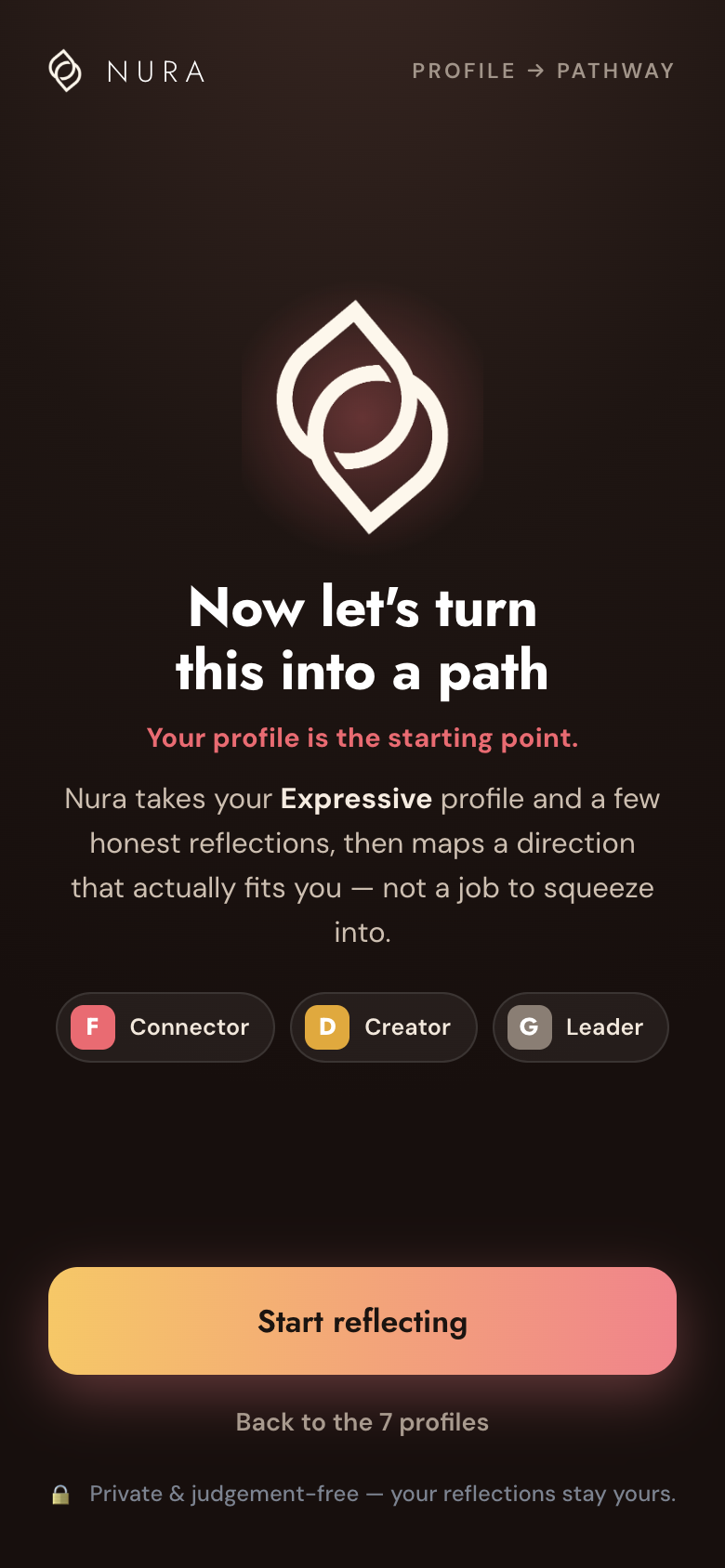
Not a list of 20 careers. An invitation to explore.
What kinds of work might suit them? What environments might they enjoy? What skills could they develop? Nura encourages students to find out.
That's where an idea moves from something that sounds interesting to something you actually experience.
What Nura looks like for a student
Reflect
Students complete the Nura assessment and spend some time thinking about themselves.
Understand
Nura turns their responses into a picture of their strengths, preferences and patterns.
Explore
Students connect what they've learned about themselves with different possibilities for their future.
Experiment
They try challenges, explore ideas and learn more about the things that interest them.
Take the next step
They finish with a better understanding of themselves and practical ideas about what to explore next.
It's not about having the answer.
It's about having a better place to start.
We don't expect a 16-year-old to know what they want to do for the rest of their life.
And schools shouldn't have to pretend they do either. Jobs change. Technology changes. Industries change. People change. A student might have three or four completely different careers over their lifetime.
So we're less interested in helping a student pick the one right career, and more interested in helping them develop the self-awareness and confidence to make good decisions as they go.
Understanding themselves. Being curious. Trying things. Learning from those experiences. And being comfortable changing direction.
And where do schools fit in?
Pretty much everywhere.
Nura shouldn't sit separately from the work you're already doing. It can support careers education, pastoral programmes, subject selection, mentoring and conversations between students, teachers and whānau. Every school is different, so we'll work with you to figure out what makes sense.
For careers teams
You know your students and your school. You probably don't need another piece of software that creates more work. Nura gives students something meaningful to do themselves — and gives you a way into conversations that can be hard to start.
Instead of
“Have you thought about what you want to do?”
you can start with
“What did you notice about yourself?”
For teachers
Not every teacher considers themselves a careers advisor. But you have conversations with young people every day about their strengths, interests, confidence and future.
Nura gives you another way to support those conversations — without needing to become an expert in personality profiling or career planning.
For students
This is your future. You don't need to have it all figured out, or know what job you'll have when you're 35. And you definitely don't need to choose something just because everyone else seems to know what they're doing.
Nura is a place to start figuring out what makes you tick and what you might want to try next.
Built for young people.
Built for schools.
Privacy matters
Students shouldn't have to give up their privacy to get useful support. Schools can see how students are engaging with Nura without access to the personal reflections that belong to each student.
Starting in New Zealand
Nura is designed with the New Zealand education environment in mind. We're working with schools to see what happens when these conversations start a little earlier — with the young person, rather than the career.
Why we built Nura
We've spent a lot of time thinking about the gap between education and the world of work. One thing kept coming up.
We're asking young people to make increasingly important decisions about their future at exactly the time when they're still working out who they are.
That didn't seem quite right. So we started with a simple question:
What if we helped young people answer “Who they are” before we asked them “What they want to do?”
That's where Nura came from. We're still learning — working with schools and students, testing what works and listening carefully to what young people tell us.
We don't think we've solved career planning. We think we've found an important place to start.

Aidan Kyrke-Smith
Founder, Nura
See Nura in action
If you're a school leader, careers advisor, teacher or someone working with young people, we'd love to show you what we're building. We'll walk you through the student experience, explain how schools can use Nura and talk about what you're trying to achieve.
No hard sell. Just a conversation.
Thanks.
Your message is on its way to us. We'll be in touch soon.